Duck Hill, Mississippi · Community & Commerce · 1870–1960
Commerce at Spring Hill
A Self-Sustaining Community
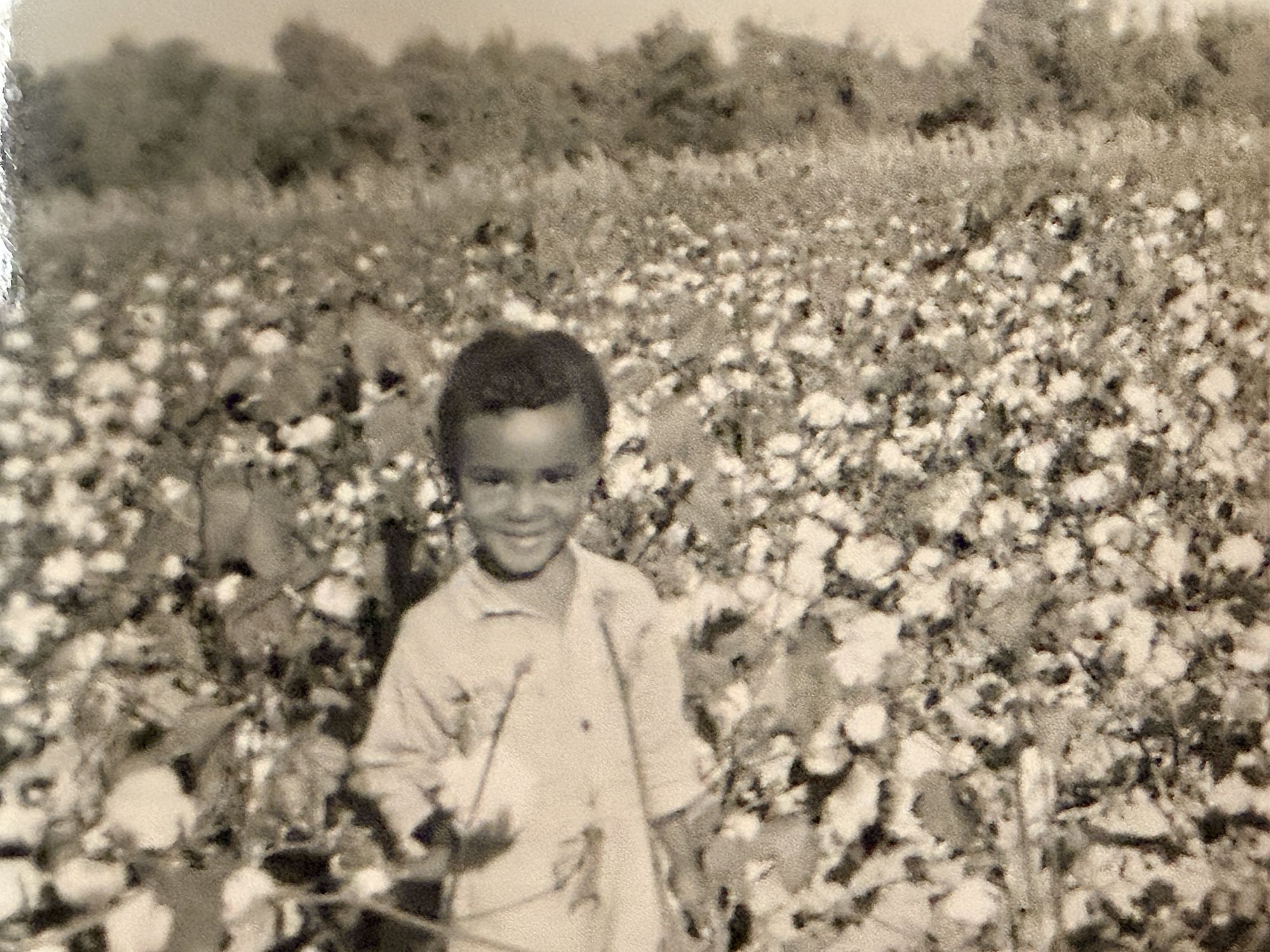
Spring Hill never picked anyone else’s cotton but their own.
Business & Enterprise
An Economy of Their Own
Spring Hill was self-sustaining — a community of landowners who planted, plowed, chopped, harvested, ginned, and sold their own cotton. Families did business directly with the Chicago Mercantile Exchange, sending their crop to market on their own terms.
In some seasons, landowning families hired tenants to help work the land — arrangements that, unlike the exploitative sharecropping systems of places such as the Mississippi Delta, were built on land the community itself owned. R.A. “Ruben” Shelton, who ran the community store, employed seven tenants of his own. Deeds of trust, tax records, and bank ledgers dating back to 1870 document a community that built and held its own capital.
Closing the Loop
“We Were Self-Sustaining”
When R.A. “Ruben” Shelton opened his store in 1936, he closed the loop: Spring Hill was 100 percent self-sustaining. Conducting commerce worked for these Black families because they owned everything they needed to do it: the land, the gins and mills, the skills and the store. Their banking was done at the Bank of Winona and the Bank of Kilmichael.
Owned and Operated
James Townsend
A cotton gin, a steam gin, a sawmill, a planer mill, a blacksmith shop and a grist mill.
Charlie Loggins
A cotton gin powered by a water wheel, which he owned and operated.
Johnnie Shelton
A grist mill, which he owned and operated.
R.A. “Ruben” Shelton
The community store, opened in 1936.
The Skills to Build and Keep It
Carpenters
Excellence in carpentry: John Henry McCuiston, head carpenter, with Johnnie Shelton, Fitchell Lee Shelton and Paul Purnell.
Machinists
Henry Harrison, Artis Golden and the store owner, Ruben Shelton.

Caring for Their Own
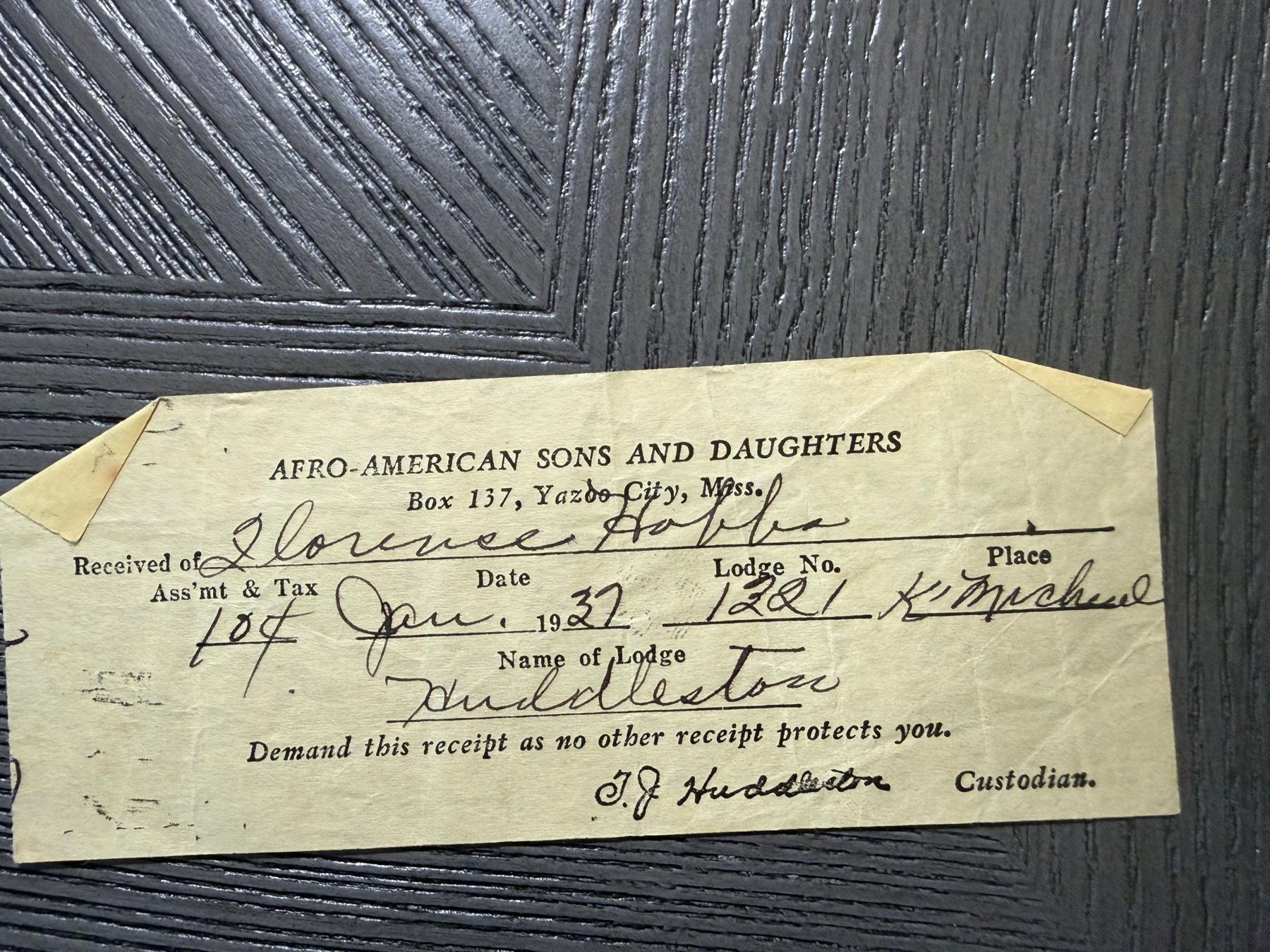
Self-sufficiency reached beyond the farm. In January 1937, Florence Hobbs, daughter of Azaline Shelton, known in the family as “Baby Sis,” paid her ten-cent dues to Lodge No. 1221 of the Afro-American Sons and Daughters at Kilmichael. The receipt is signed by the society’s founder, T. J. Huddleston, as custodian.
Founded in Yazoo City in 1924, the Afro-American Sons and Daughters was a Black fraternal society whose members paid small dues in return for medical care. In 1928 it opened the Afro-American Hospital in Yazoo City, the first hospital in Mississippi owned and run by Black people, at a time when white hospitals turned Black patients away. At its height the society had some 35,000 members. When Jim Crow denied them care, they built and paid for their own, ten cents at a time.
Land
Some Spring Hill families owned more than 1,000 acres, such as Les and Dollie “Sweet” Baines Shelton.
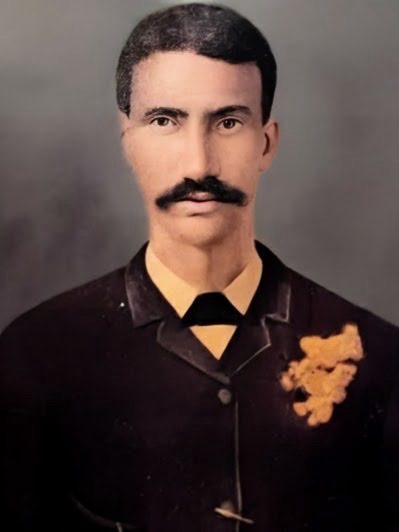
Cotton gin owner

General store owner
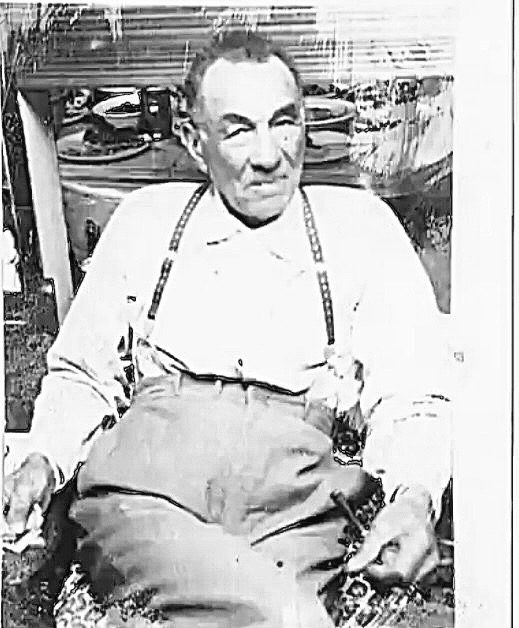
Grist mill owner
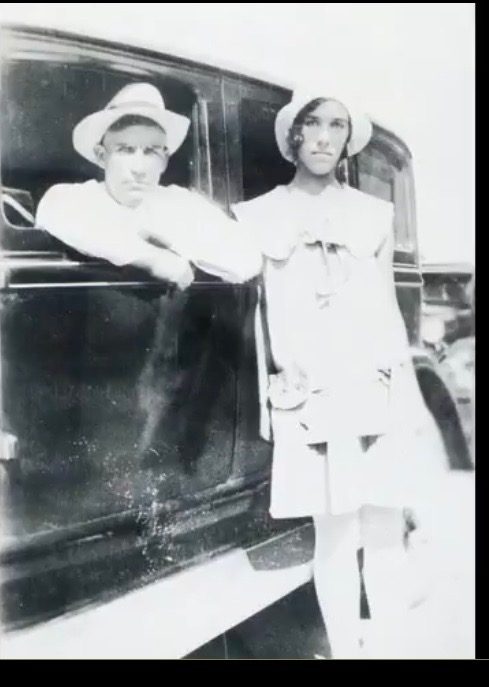
Land barons
Doing Business in Winona
Hitt, Hart & Blackston Co.
Cotton, credit, taxes and land: one Winona firm across a quarter century of Spring Hill’s business.
Spring Hill families sold their cotton, bought supplies and borrowed against coming crops in Winona, the county seat. Again and again their papers lead to one firm: Hitt, Hart & Blackston Co., whose officers in 1938 were Henry Hart, president, and W. F. Blackston, vice president. In a small cotton town before modern farm credit, a firm like this did the work of a cotton broker, a supply store and a bank all at once. Blackston himself was remembered as prominent in Winona’s mercantile, banking and cotton business, and a Hart, Ellis Hart, later served as president of the Bank of Winona.
- 1915
A crop lien bought by a Spring Hill man
On May 8, 1915, Wiley and Lula Brown borrowed $181.50 from Hitt, Hart & Blackston, due November 1. To secure it they pledged 80 acres, the east half of the northwest quarter of Section 26, Township 20, Range 7 East; the crops they would grow that year on their own land and on Anderson Harrison’s place; and their stock: a yellow horse named Charlie, a bay mare and her increase, and a young mule colt. It was the usual “furnish” arrangement of the cotton South. On November 22, 1915, for $137.83, the firm signed the deed in trust and note over to Miles Shelton “without recourse,” so a Spring Hill man, not a town merchant, now held the debt. A note at the bottom, signed with his mark, releases the Browns’ livestock from the lien.
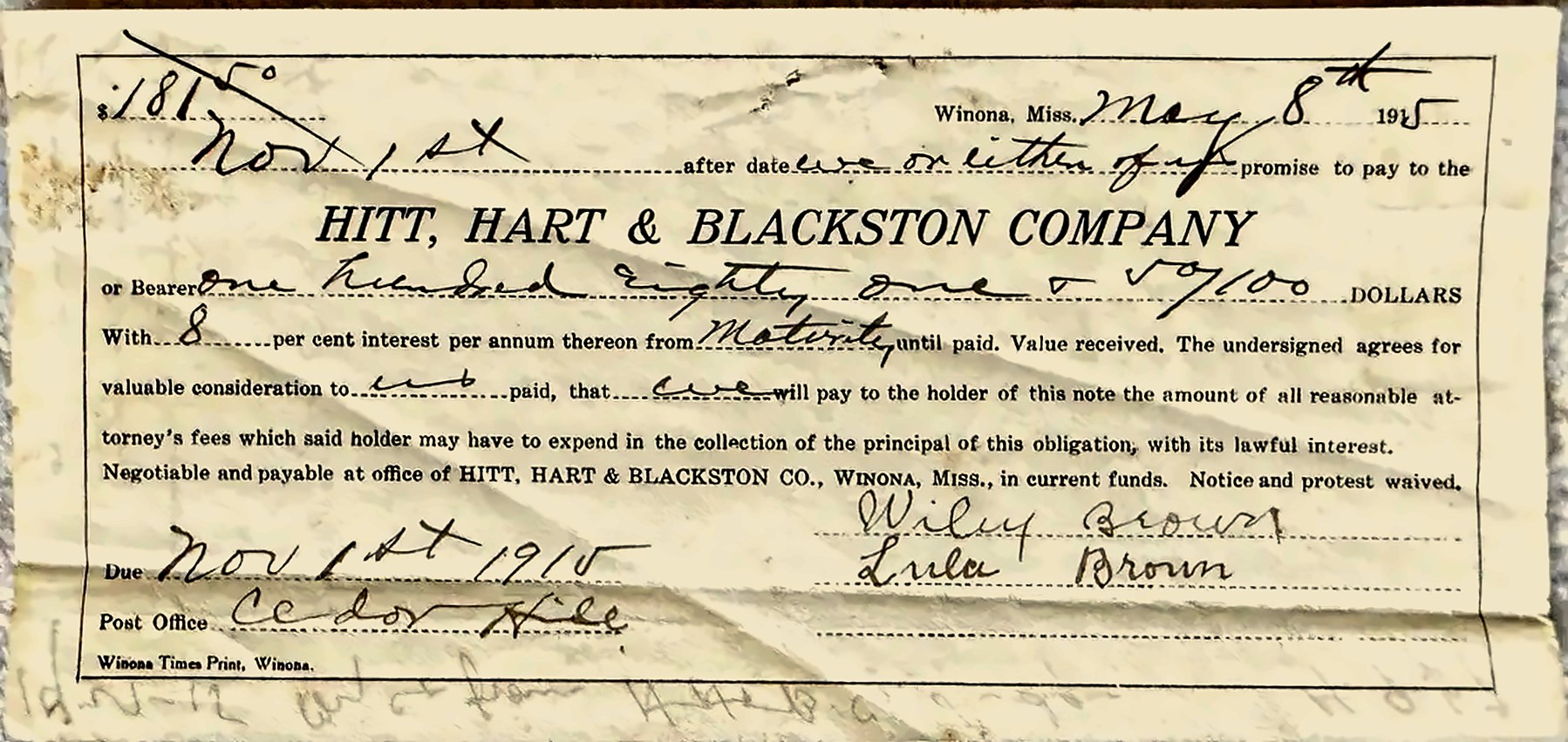
The $181.50 note 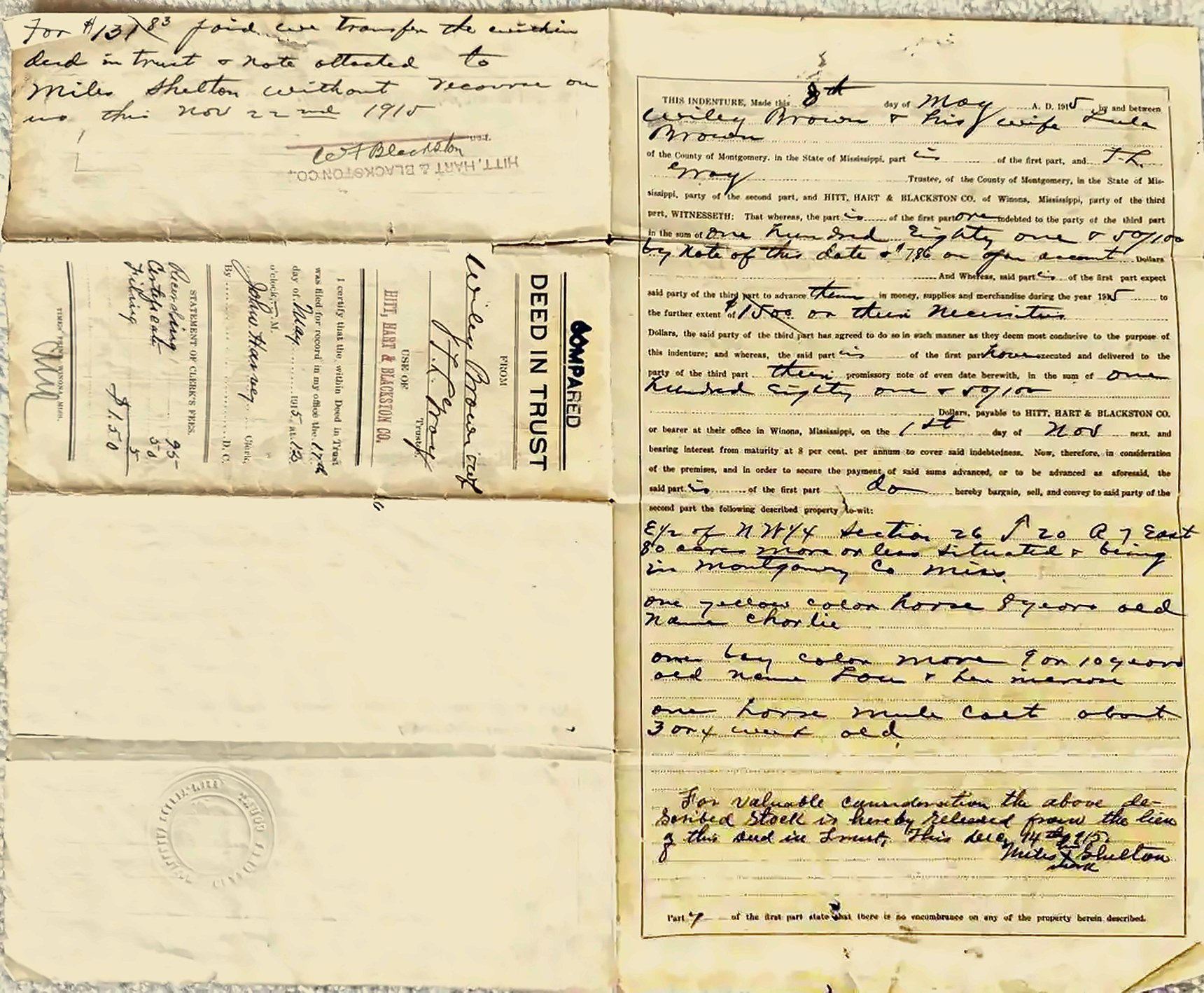
Deed in trust & transfer to Miles Shelton 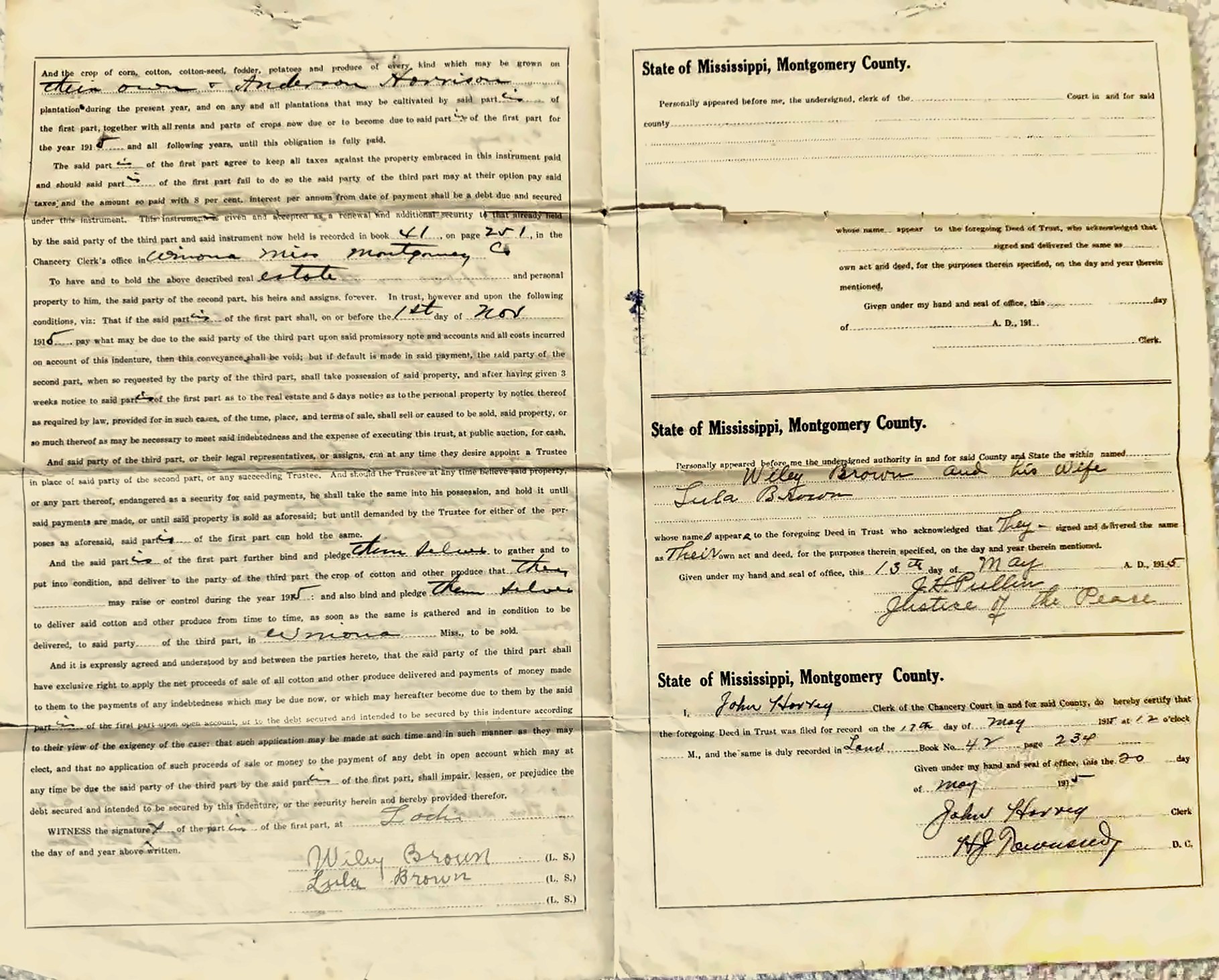
Signed & recorded - 1937
Land lost to the Depression
On September 20, 1937, 120 acres assessed to Henry Harrison, brother of Mary Harrison Shelton, were sold for unpaid 1936 taxes. The buyer was W. F. Blackston. The parcel was the east half of the northwest quarter and the southwest quarter of the northeast quarter of Section 26: the same 80 acres the Browns had pledged in 1915, plus 40 more. As holder, Blackston went on paying the county taxes in the years that followed.
- 1938
Mary Shelton sells her own cotton
On September 4, 1938, Hitt, Hart & Blackston bought two bales of cotton, 508 and 520 pounds, from Mary J. Shelton at 6 cents a pound, $61.68 in all. After 15 cents for weighing and $2.70 for storage, the receipt shows $48.83 paid and a $10.00 balance, with Rube Shelton’s name written on the cash line. A Black woman in Jim Crow Mississippi was selling her family’s crop in her own name. When the 1938 county taxes came due early the next year, M. S. Shelton paid $9.70 on 175 acres, among them land in Section 23, where Miles Shelton had bought his 160 acres in 1900. The receipt for the Harrison land, made out in Henry Harrison’s name, reads “Paid by W. F. Blackston”: $4.16.
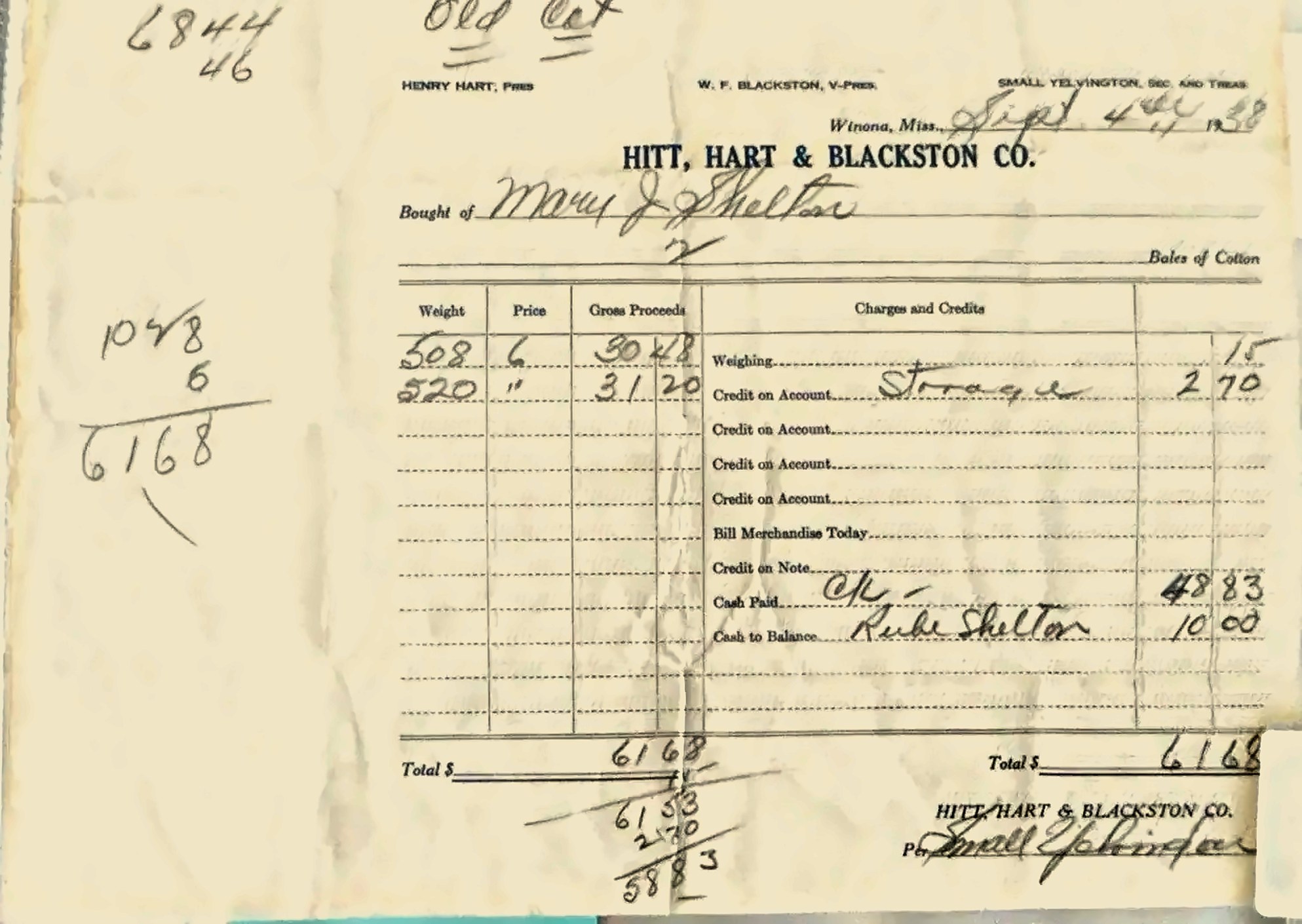
Cotton receipt, Mary J. Shelton 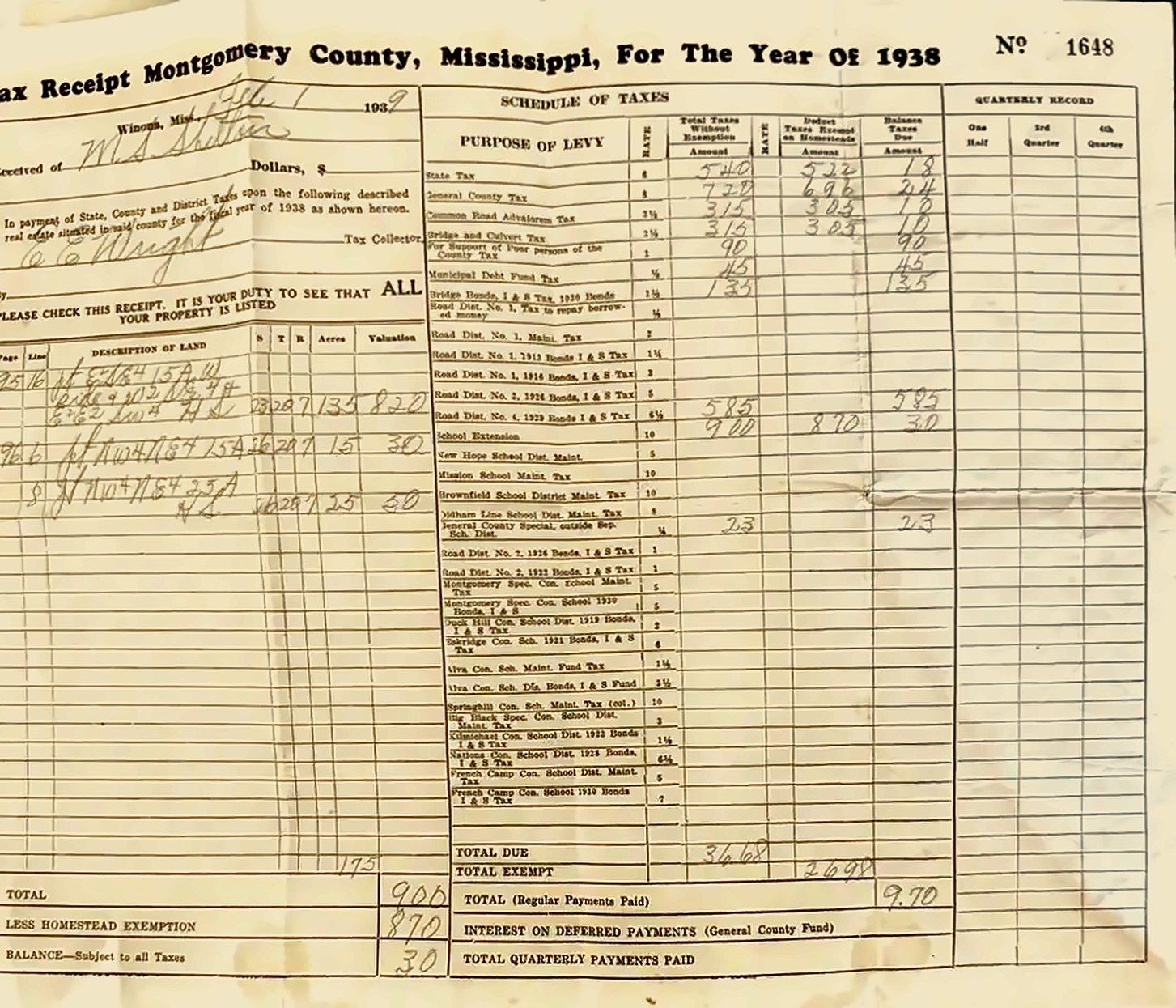
1938 taxes, M. S. Shelton 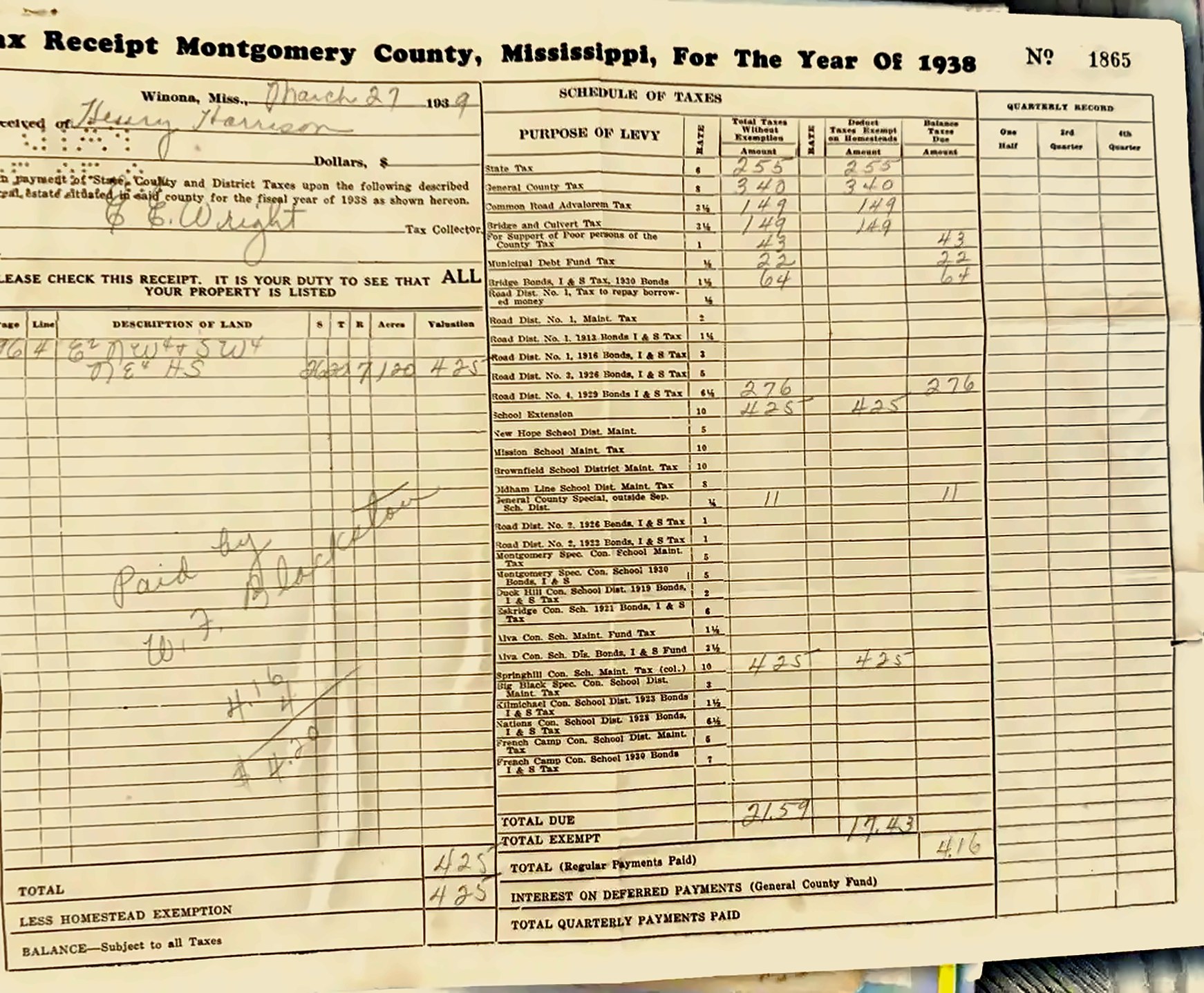
1938 taxes, “Paid by W. F. Blackston” - 1939
Bought back
On August 30, 1939, Ruben Shelton paid Chancery Clerk Otis E. Brannon $52.14 and redeemed the Harrison land. The statement on the release adds it up: the 1936 taxes the land was sold for, the 1937 and 1938 taxes Blackston had paid since, the 5 percent and 1 percent a month the law allowed the buyer, and the clerk’s fees. The land returned to the family, and when the 1939 taxes came due, the receipts for both the Shelton land and the Harrison land read “Paid by R. A. Shelton.”
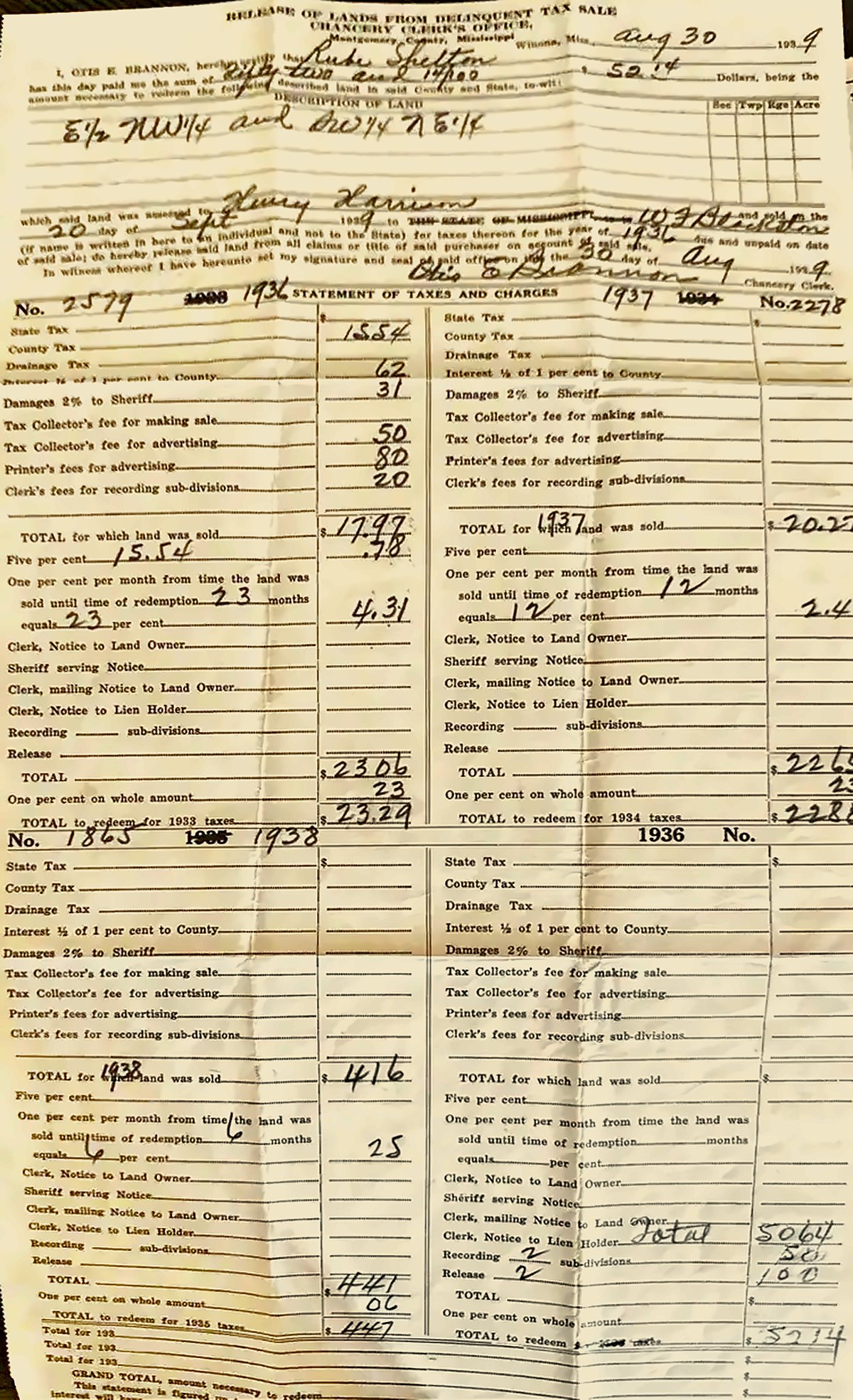
Release from tax sale, $52.14 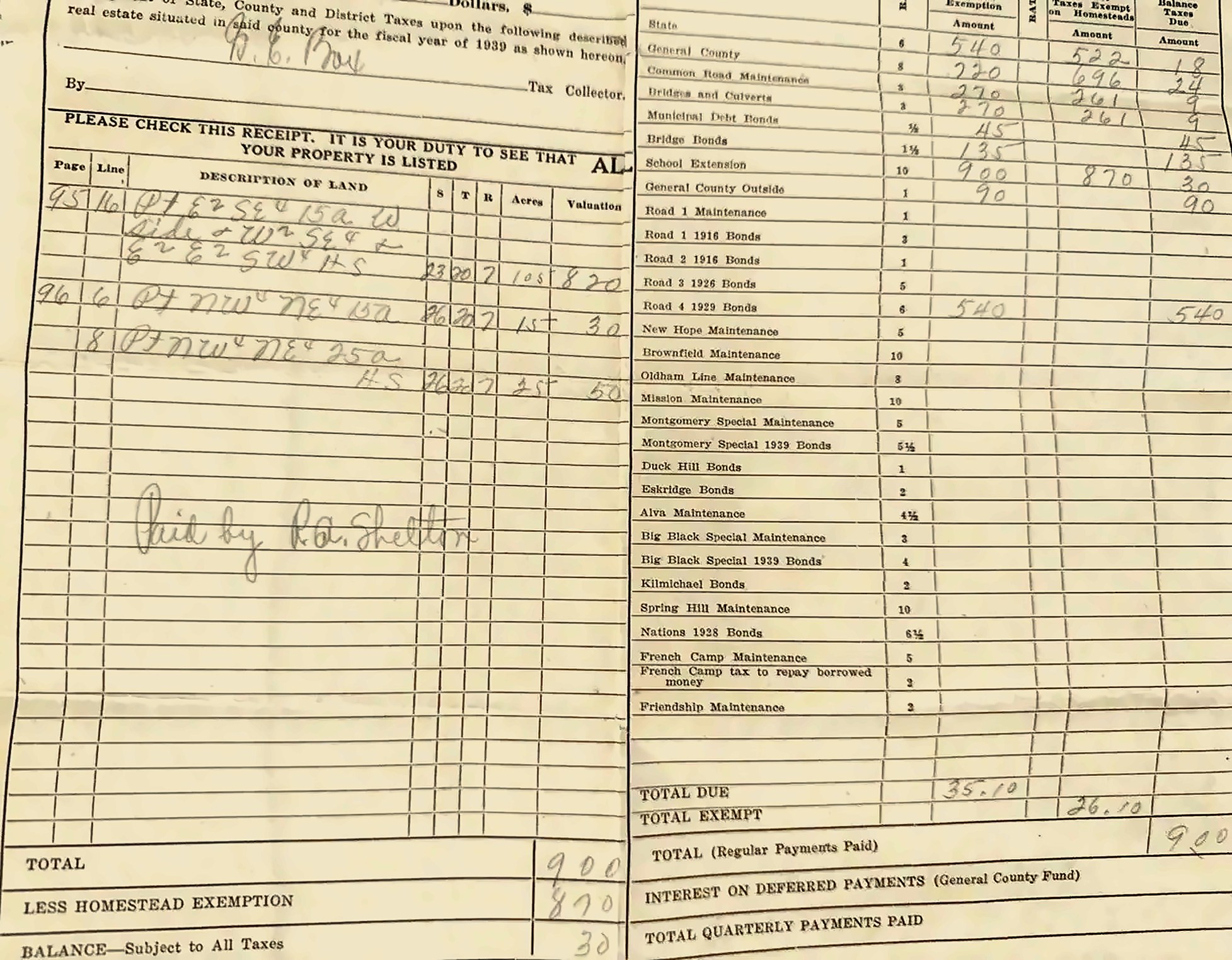
1939 taxes, Shelton land 
1939 taxes, Harrison land
What the papers show, and what they don’t
The documents show a working relationship that lasted decades: Spring Hill families borrowed, sold and paid through this firm, and when Depression-era land slipped away, the family was able to buy it back. They do not show how the Browns’ 80 acres came to be assessed to Henry Harrison, and they do not tell us the firm’s motives. A tax-sale buyer who is repaid with interest can be a hard creditor or a patient one, and the papers alone cannot say which. Nor do they show whether Henry Hart of 1938 was related to Ellis Hart or to the Hart family of Winona remembered today.
Family Memory
Spring Hill families remember the Harts as more than business partners. Dewey Townsend’s daughter Gayle recalls that Ellis Hart, a friend of her grandfather, gave her wedding gifts in 1984, and that as a girl of about six she saw a Black man working behind the cash register at Mr. Hart’s store in Winona, the first time she had ever seen such a thing, and stopped to stare.
Ellis Hart’s son, Macy B. Hart, grew up in Winona in the 1950s and ’60s, when the Harts were the only Jewish family in town. In his 2017 oral history for the Mississippi Department of Archives and History, he names the man at that register: Jiles Edwards, who was also a friend of Dewey Townsend. He recalls that in the 1960s the store let Black women try on hats, at a time when many Southern stores would not let Black customers try on clothing. He also speaks of his mother’s father, Joe Schneider, who learned a great deal from the Buffalo Soldiers he commanded in Italy during the war. The Schneiders kept Orthodox ways and the Harts were Reform, yet Joe Schneider chose to open the family store on Saturdays, the Sabbath, to provide for his family.
The Hart and Schneider families carried real weight in Montgomery County. Ellis Hart, president of the Bank of Winona and a man of Dewey Townsend’s generation, lived past 100. Family memory credits the families with bringing a McGregor shirt factory to Winona that gave work to some 500 people, down the road from the Townsend family home.
Sources: Shelton and Townsend family papers, including the 1915 deed in trust and note (Montgomery County Deed Book 47, page 230), the 1938 Hitt, Hart & Blackston cotton receipt, 1938 and 1939 Montgomery County tax receipts, and the 1939 release of land from delinquent tax sale; family oral history; MDAH, Conversations: Macy B. Hart, interviewed by Larry Morrissey (April 2017).
From the Family Papers
Miles Shelton, Landowner (1900)
One hundred sixty acres, a promissory note, and a deed he owned free and clear.

In His Own WordsDewey Townsend (1918–2014) remembers Miles Shelton, a formerly enslaved man who became a Spring Hill landowner. Watch on YouTube →
On December 11, 1900, Miles Shelton bought 160 acres from J.F. and M.J. Stoker: the southeast quarter of Section 23, Township 20, Range 7 East, in Montgomery County. He paid $600 in cash and signed a promissory note for the remaining $660.
The back of that note, still in the family’s papers, records his payments in the creditor’s hand: $15 in January 1901, then $445 that December. In October 1902 the deed was recorded at the Montgomery County courthouse, and the debt was marked satisfied.
At a time when land ownership was hard won for Black families in Mississippi, Miles Shelton owned his land outright.
Like many Spring Hill families, the Sheltons carried mixed ancestry, but under Mississippi’s “one drop” laws they lived, worked, and built as members of the Black community. His name lived on in Spring Hill’s memory of its commerce, as Dewey Townsend recalls in this interview.
- Dec 11, 1900$600Cash paid; deed signed before J.A. Hood, J.P.
- Jan 1901$15First payment on the $660 note
- Dec 16, 1901$445Paid on the note
- Oct 1902PaidDeed recorded, Book 27; note marked satisfied
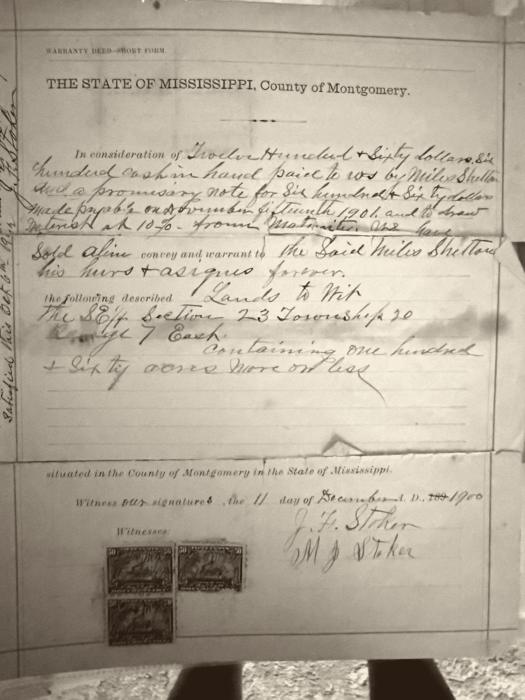 Warranty Deed · 1900
The Stokers convey the SE¼ of Section 23 to Miles Shelton for $1,260. Federal revenue stamps at the bottom; “Satisfied” noted in the left margin.
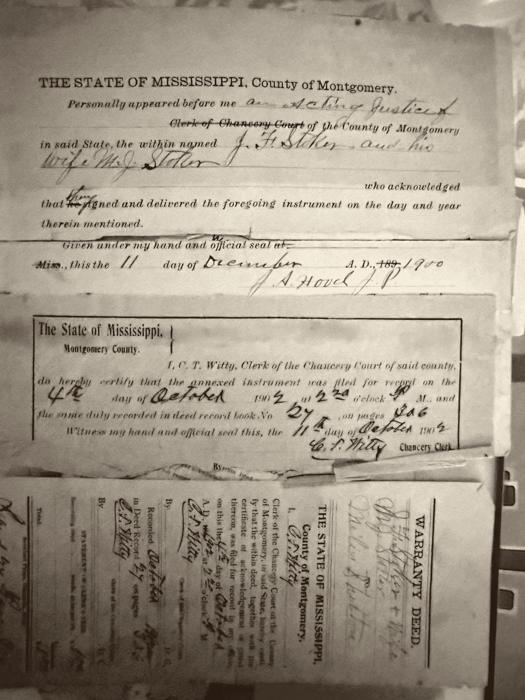 Acknowledged & Recorded
Sworn before Justice of the Peace J.A. Hood, then recorded by Chancery Clerk C.T. Witty in Deed Record Book 27, October 1902.
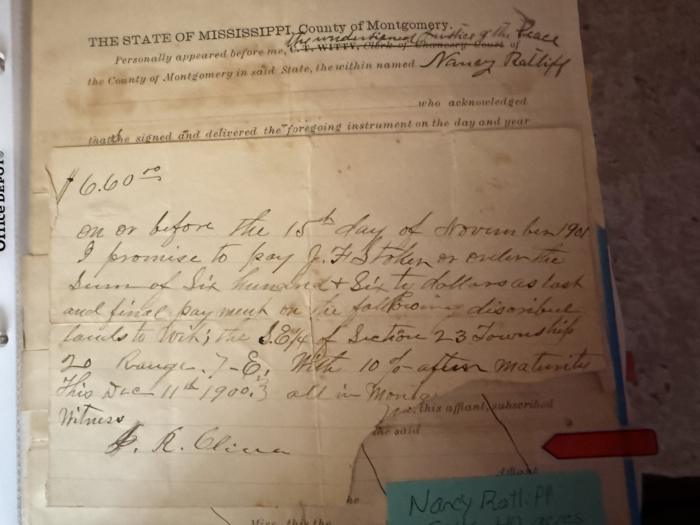 Promissory Note · $660
Due on or before November 15, 1901, payable to J.F. Stoker, secured by the same land, with 10% interest after maturity.
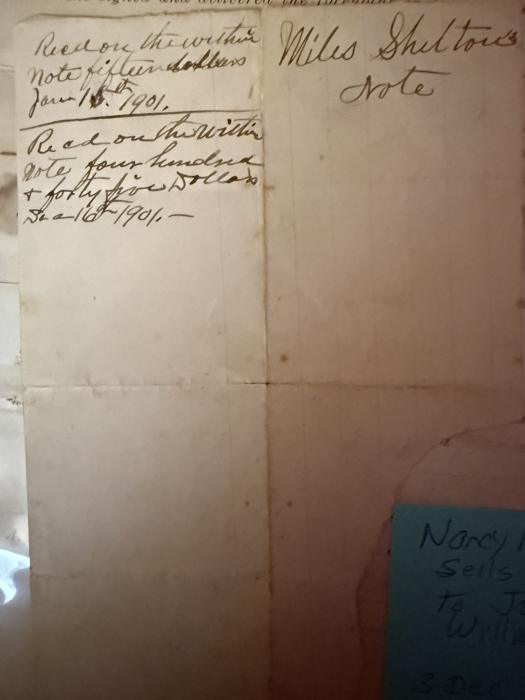 “Miles Shelton’s Note”
Payments received on the note: fifteen dollars in January 1901 and four hundred forty-five dollars on December 16, 1901.
The Purnell–Ingram Family
Success Is in the Blood
From a slave ship to more than a thousand acres of Montgomery County land.
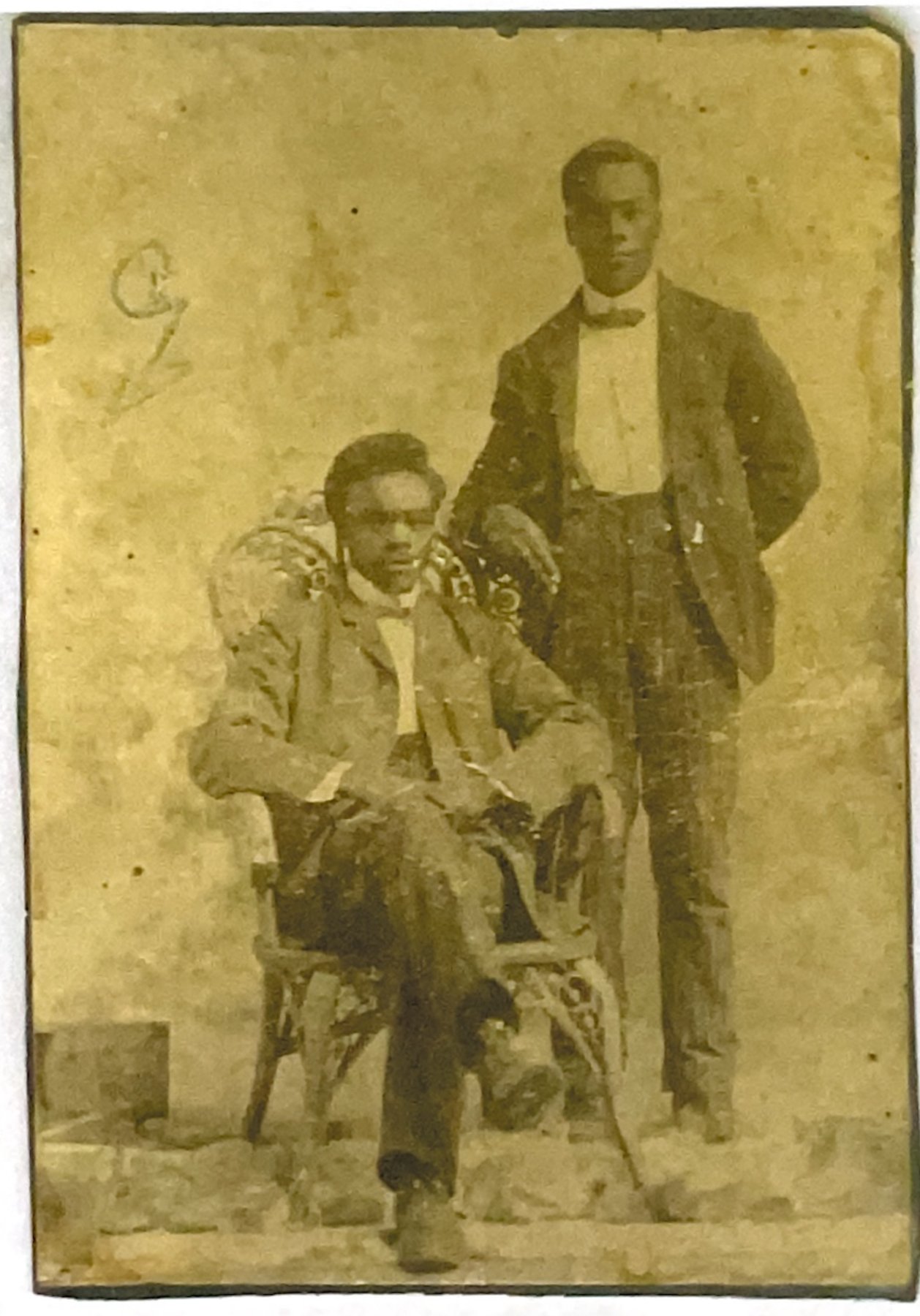
George Purnell
The Purnell story begins in slavery. George Purnell was born into bondage in 1853, and according to family history he survived the crossing from Africa to America chained aboard a slave ship, one of the millions carried across the Atlantic and among those strong enough to live through it.
After freedom, George married Mary Jane Ingram, the youngest child of York and Hannah Ingram and the only one of their twelve children born free. The couple first lived and worked on a white farmer’s place in Montgomery County. Then George bought a farm of his own in the Spring Hill community, and later added land bought from Bud Townsend, which the family always called “the Townsend Place.” In all he owned about 375 acres, a remarkable achievement for a man born enslaved. Sixteen of his children were born on that farm. When George died in 1913, his grown sons kept the farm going and became successful businessmen in their own right.
Henry Purnell – Land Baron
George’s second-oldest son, Henry, never finished the eighth grade, yet he became one of the wealthiest landowners in Montgomery County. He owned more than 1,000 acres, the largest farm in the county, and held more than $100,000 in cash, a fortune almost unheard of for a Black man of his time.
His method was timber. Henry rode and walked the county looking for farms with good stands of trees, sometimes buying one for around $3,000. Before he closed a deal, he had already lined up buyers for the timber. Selling the timber paid back the purchase price, and Henry kept the land free and clear. He repeated the practice until his holdings grew and grew. As the family history puts it, Henry was a “19th Century Developer and Land Baron,” and “the master of the short sale before the term was popularized.” His reputation was so good that the bank would advance him the money, at a time when Black farmers were routinely denied credit and Mississippi law itself worked against them.
Henry also farmed and traded horses and mules. He was among the first in the area to own a tractor, though he preferred his mules, and he was known as one of the best at breaking them to the plow. For all his wealth he lived modestly and saved nearly every penny. As family historian Henry Purnell Jr. put it, “He was not the philanthropist, but he was not a miser either.”
He put his means to work for others. Henry helped build Spring Hill Baptist Church, and it was while working on the church that he fell and never recovered. His standing gave him the ear of the county’s white officials and attorneys, and a word from Henry solved many problems for Black families in Montgomery County. He set aside land for a family cemetery so the family could keep its own history, and he started the first family reunion, the Purnell Picnic, held every Fourth of July on his land with a baseball game, music and the best barbecue in the county.
Source: Winston Pittman, From Slavery to Spring Hill: The Purnell–Ingram Family, A Legacy of Love (Family Memoirs: Standing on the Shoulders of Greatness), pages 4 and 13–16, drawing on the oral history of Hester Purnell Parker, George and Mary Jane Purnell’s daughter.
A Voice in Washington
Petitioning for an Old Age Pension
Spring Hill’s commerce extended beyond its own fences — into organized civic action on behalf of its elders.
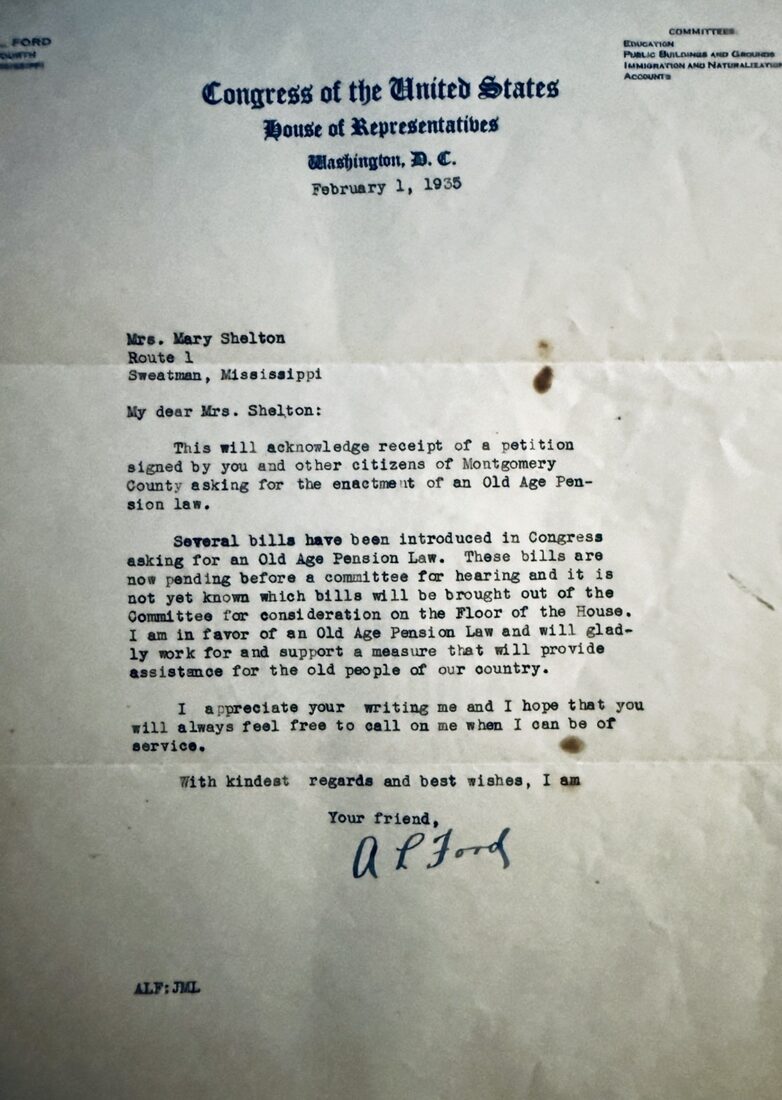
Congressman A.L. Ford’s reply to Mary Shelton’s petition for an Old Age Pension law, February 1, 1935.
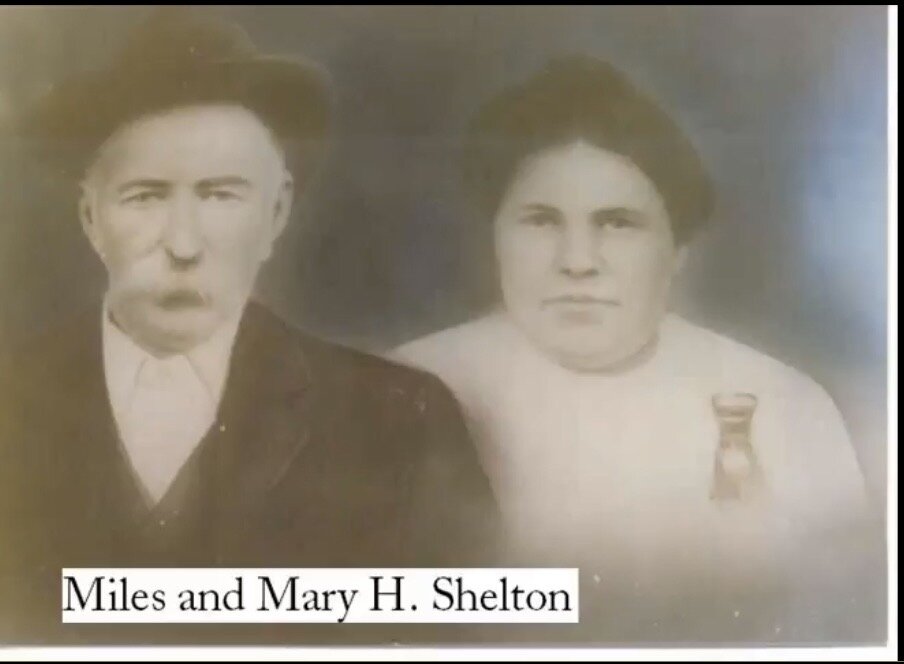
Mary Harrison Shelton, mentioned in letter, pictured with her husband Miles Shelton.
Cotton Is King
Planted, Picked, Ginned, and Sold on Their Own Terms
Row after row of cotton grown, worked, and marketed by the families who owned the land beneath it.
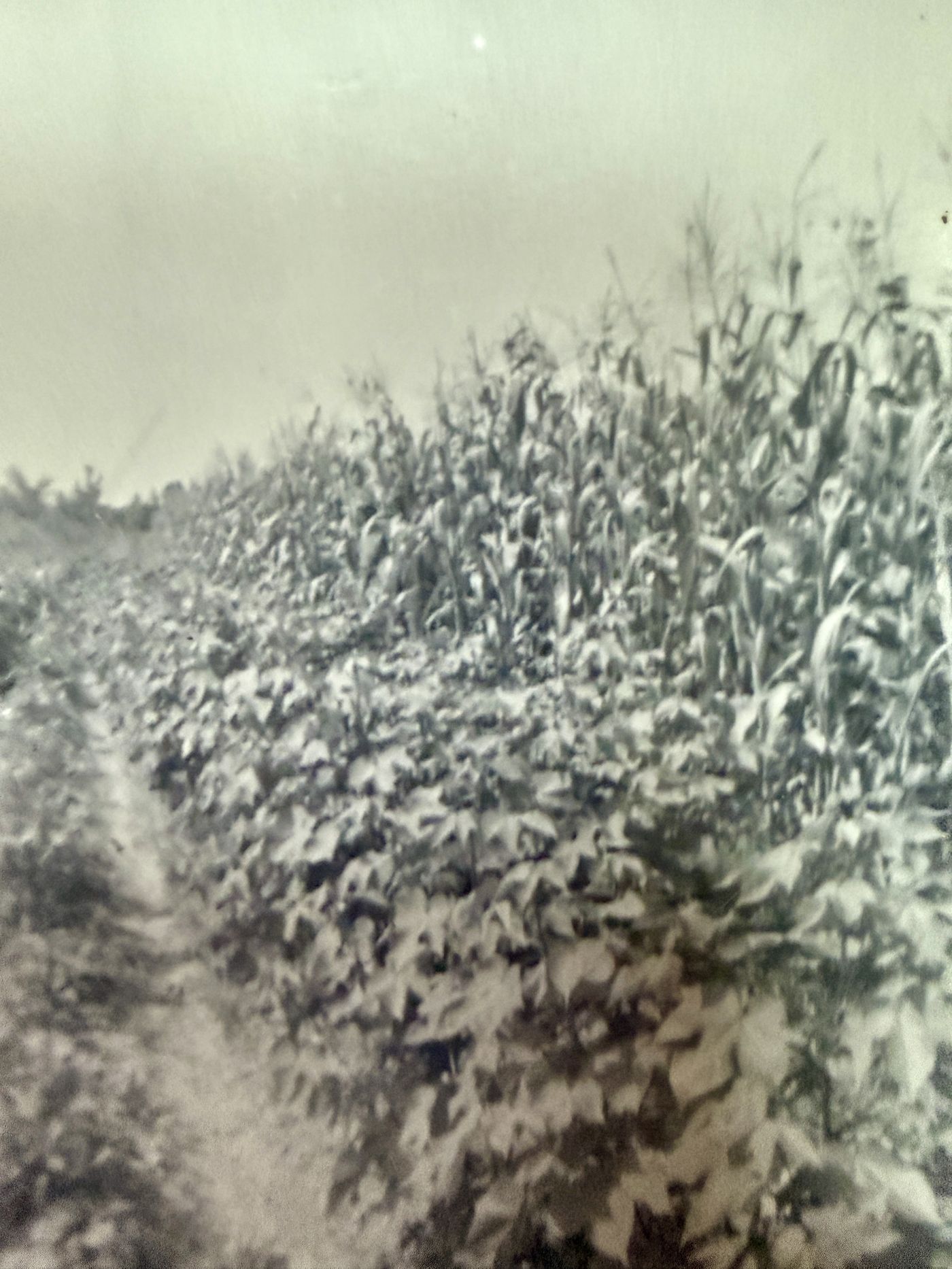
Cotton grown on Spring Hill land, worked by the families who held the deed.
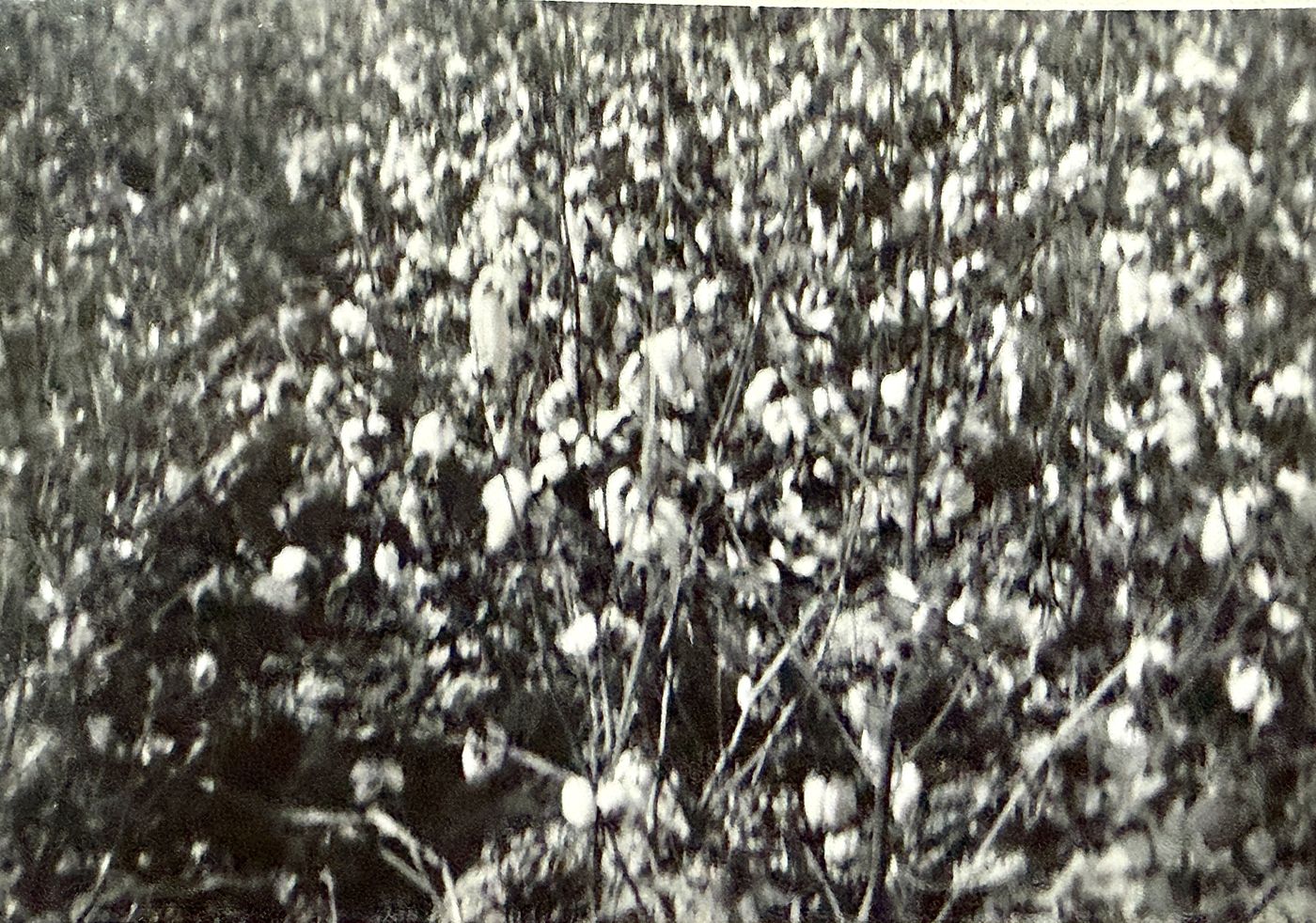
Bolls at full bloom, ready for picking, ginning, and sale.

Hog farming rounded out a diversified, self-sufficient economy.
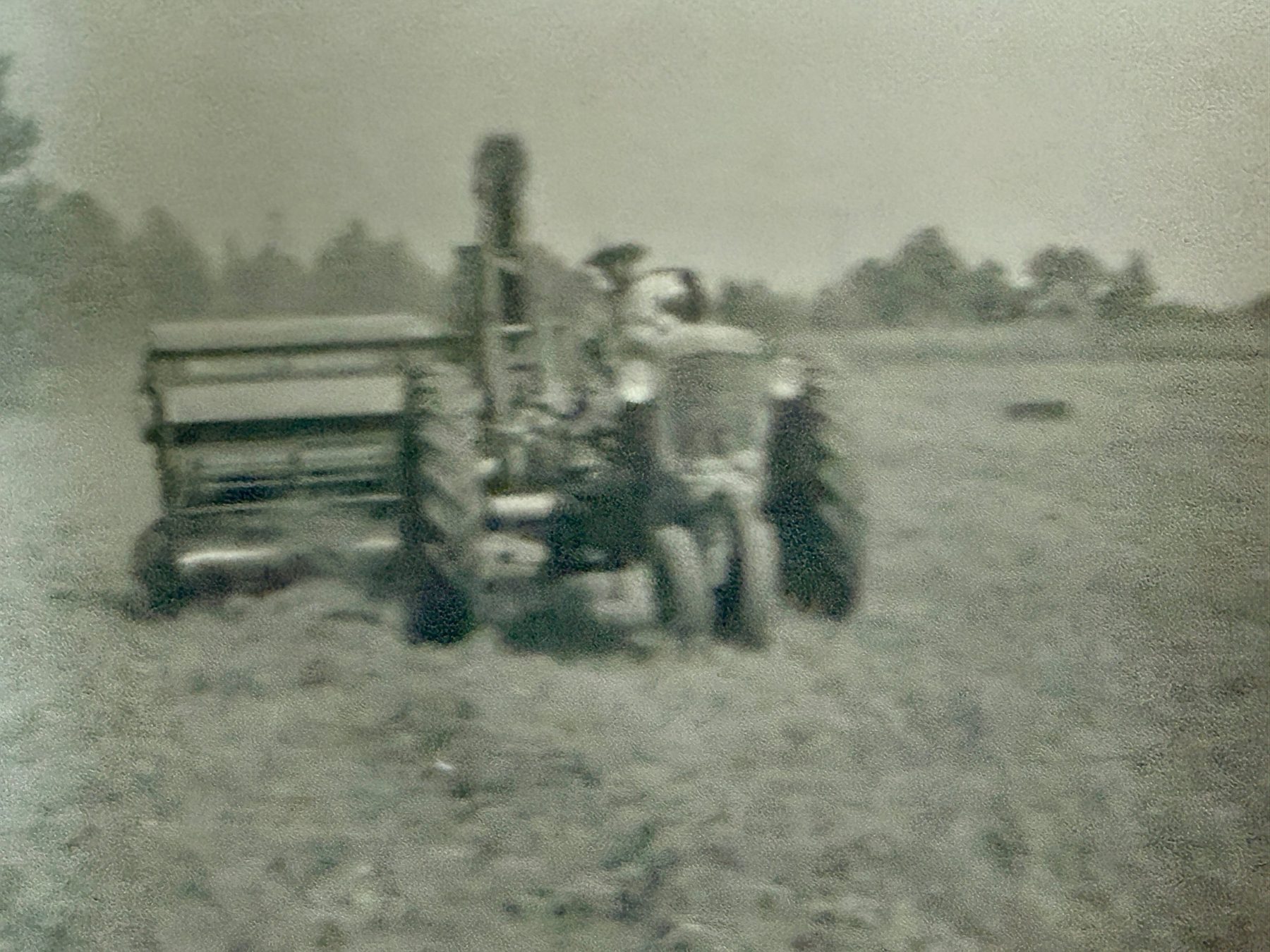
A tractor and wagon at work on Spring Hill land.

Hand-pieced quilts kept by Spring Hill families.
Machines of Progress
Tractor Farming Comes to Spring Hill
By the late 1950s, tractors and mechanized equipment were reshaping how the community worked its land.

Tractors were prevalent by the late 1950s, easing the labor of planting season.
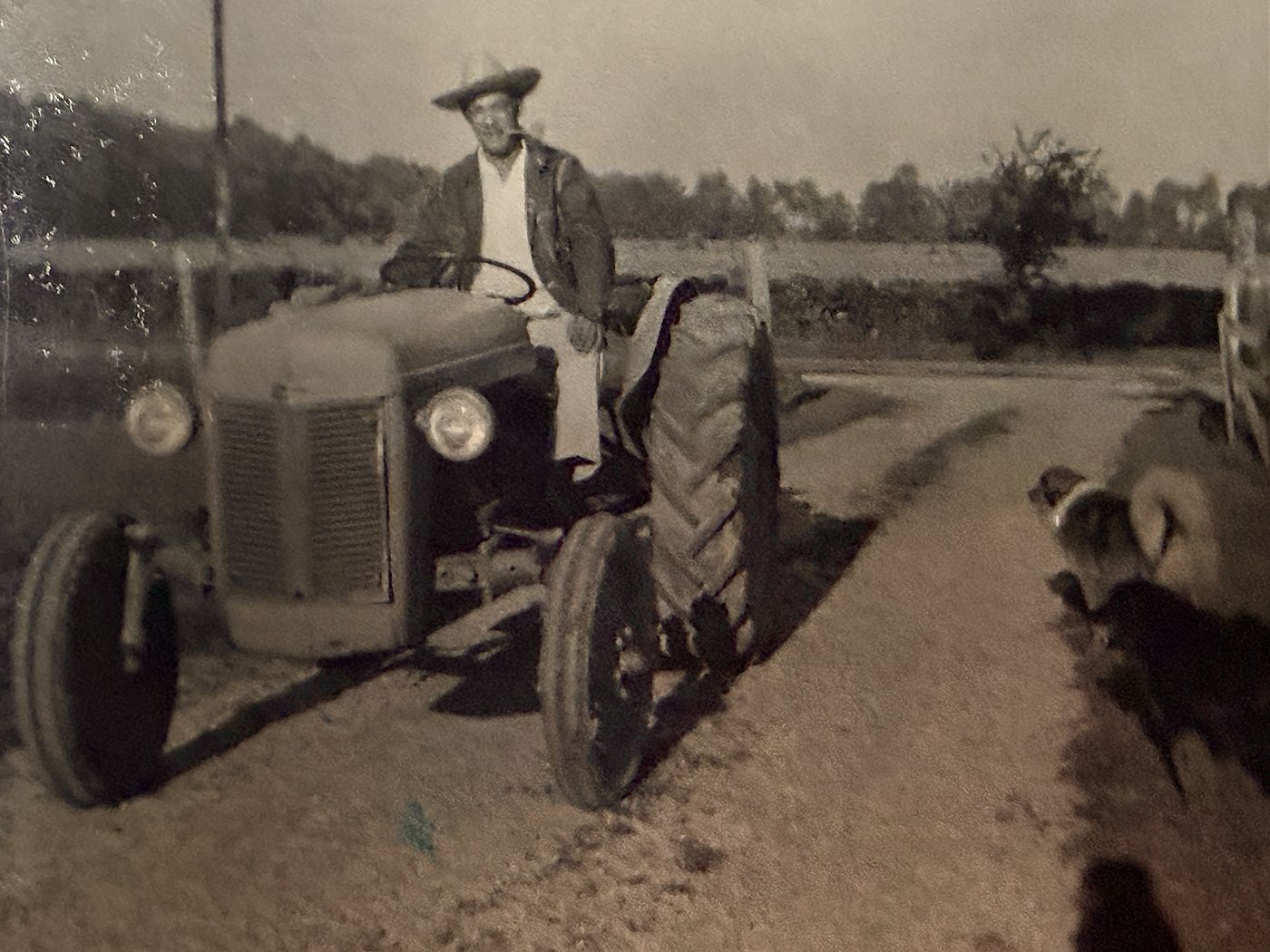
A Spring Hill landowner astride his tractor, dog close at hand.

Men of the community working the fields with tractor-drawn planting equipment.
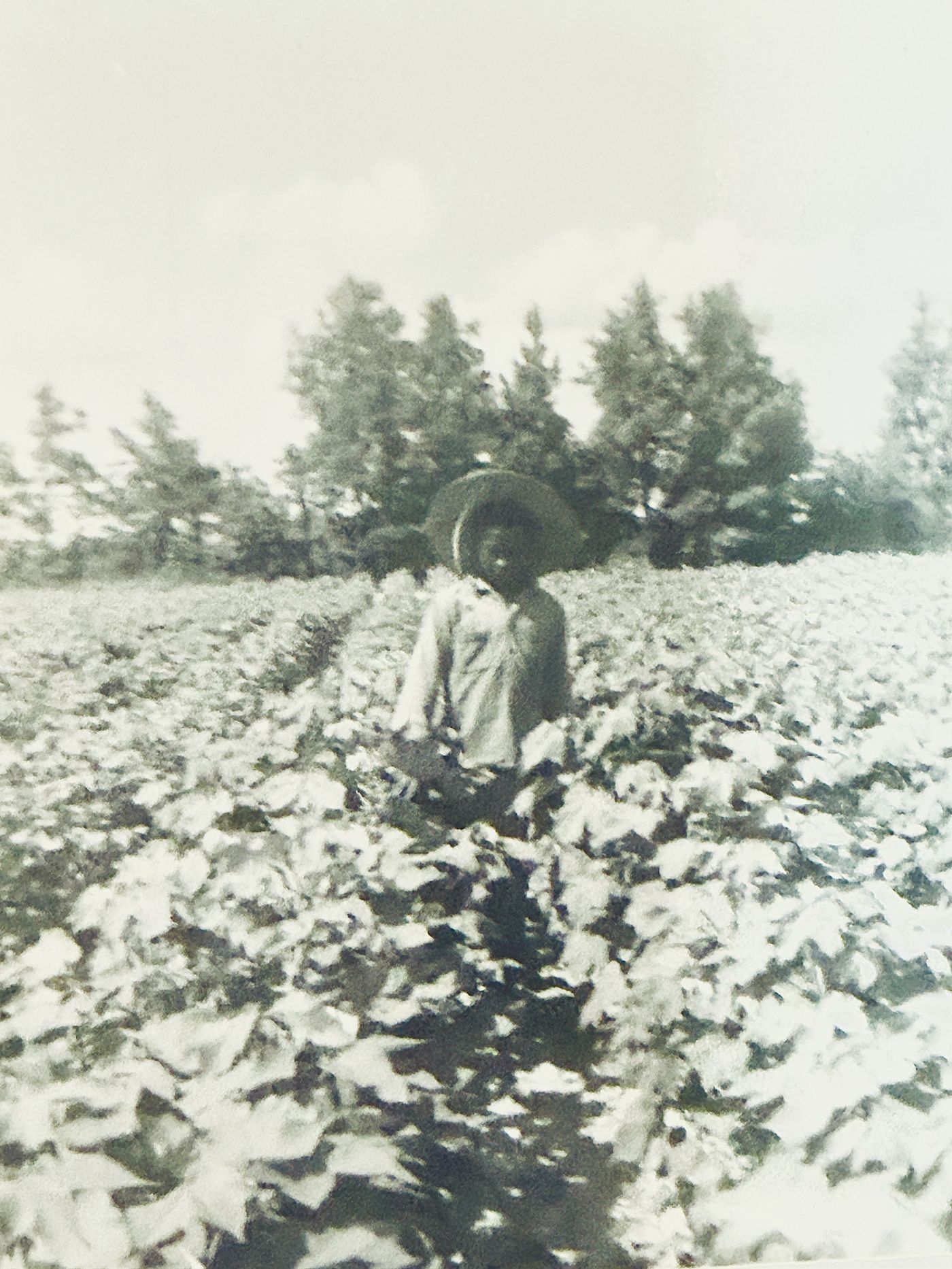
Children of Spring Hill were taught to farm their own family’s land, carrying the work forward.
The Ledger
Deeds, Accounts, and the Men Who Kept Them
Bank records, tax documents, and deeds of trust — the paper trail of a community’s ownership.
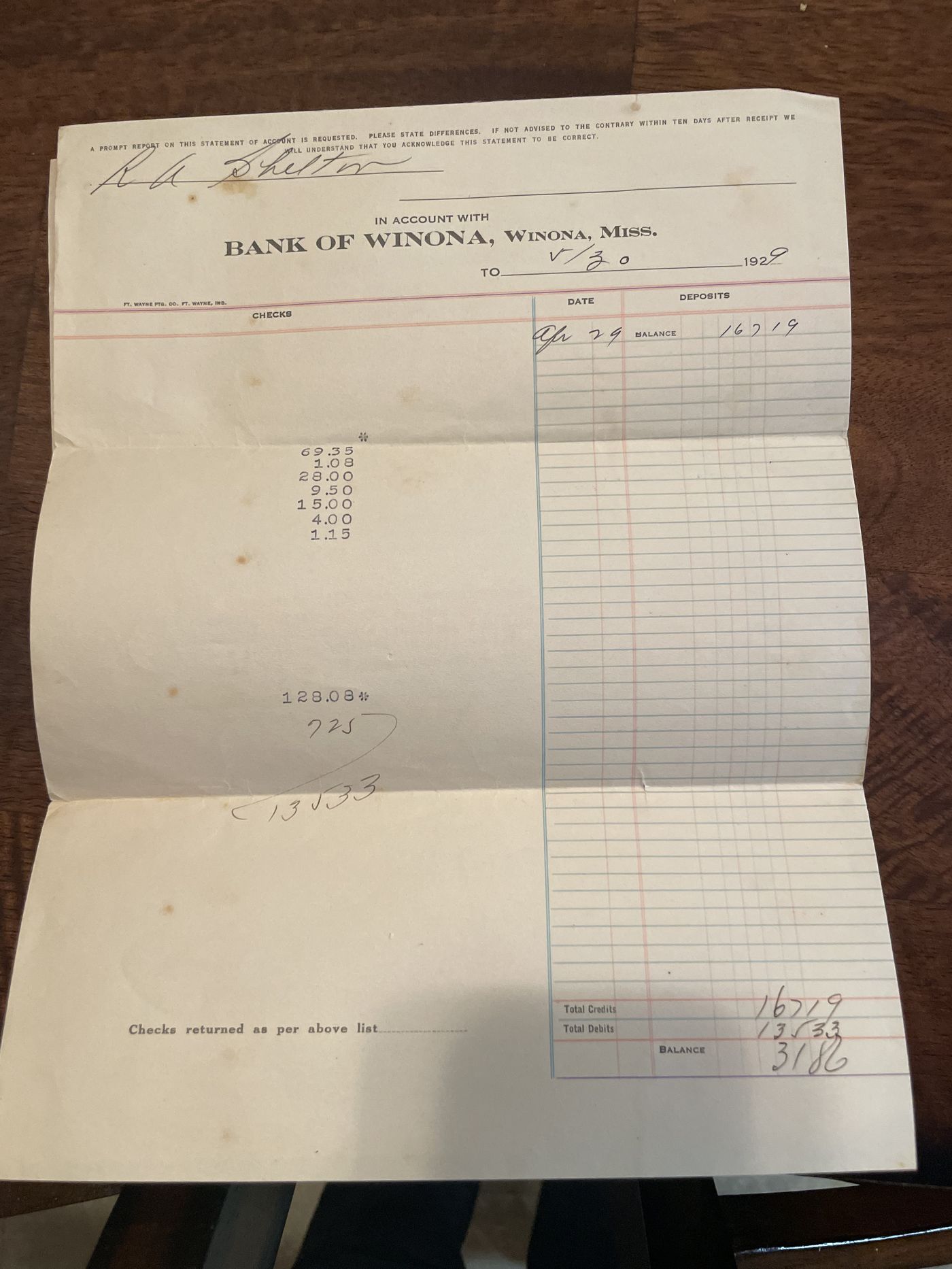 Bank of Winona · 1929
R.A. “Ruben” Shelton’s bank account record — one of many financial artifacts documenting Spring Hill’s commerce dating back to 1870.
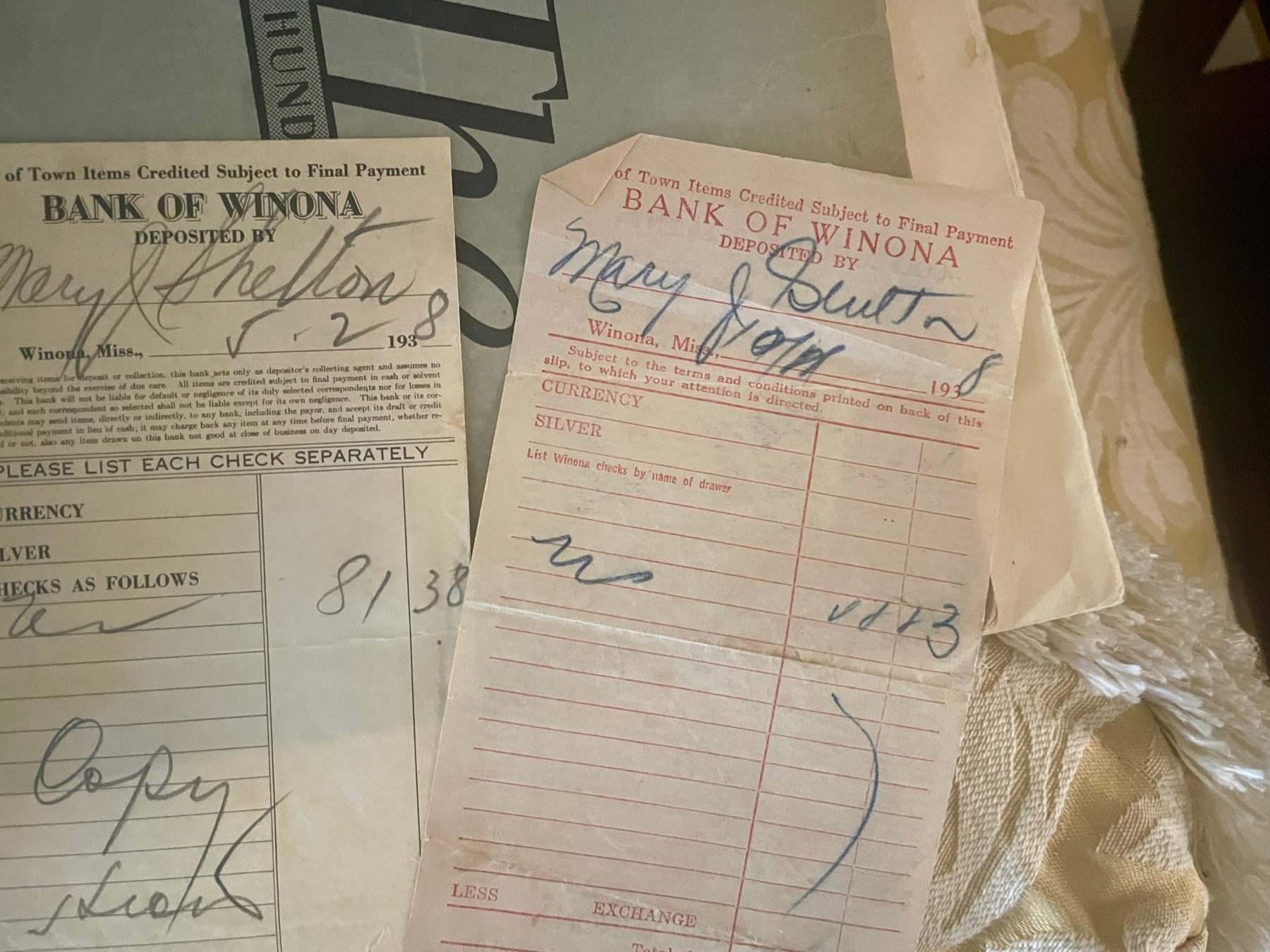 Bank of Winona · 1938
Deposit slips for Mary J. Shelton at the Bank of Winona. Spring Hill families banked in Winona and in Kilmichael.
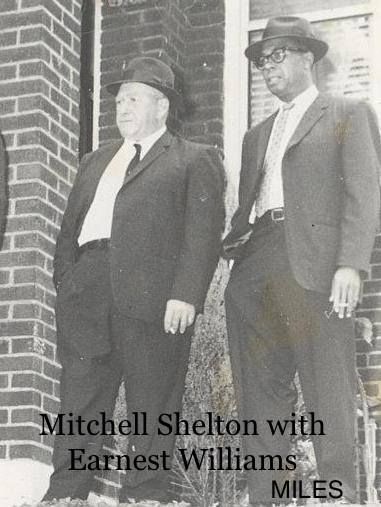 Portrait
Mitchell Shelton with Earnest Williams, two men whose lives were bound up in the community’s business and daily life.
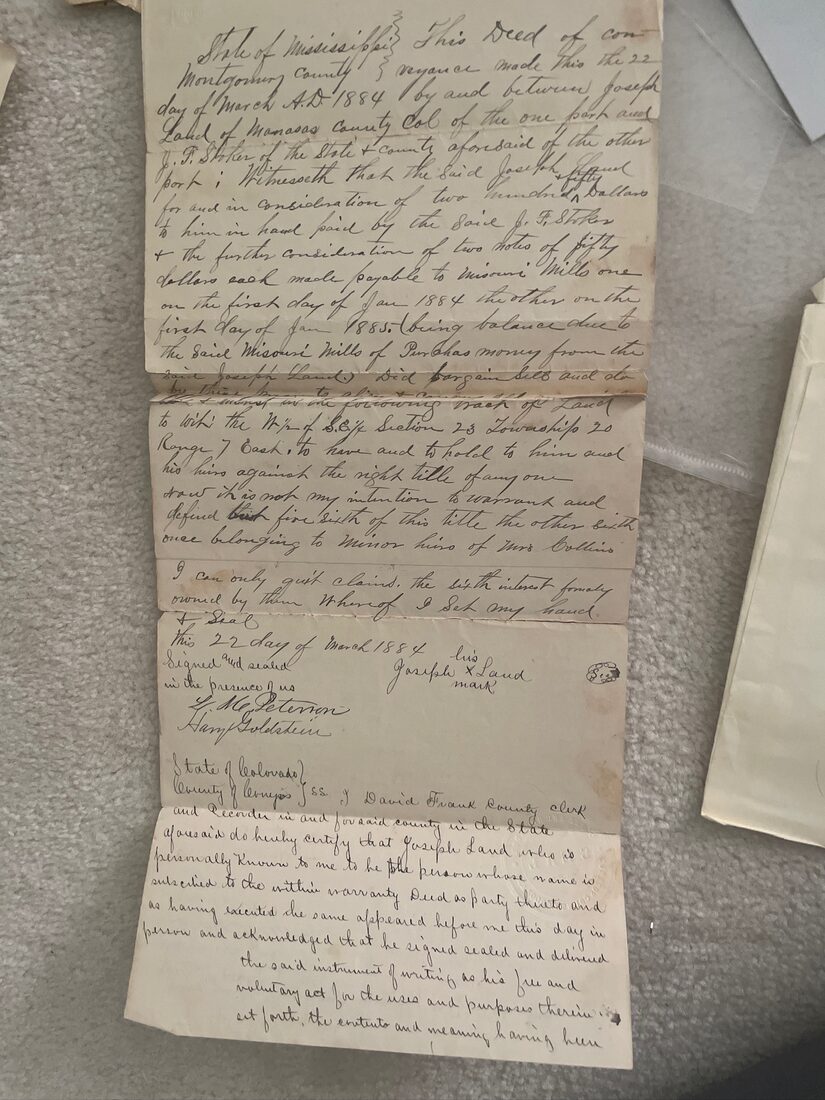 Deed · March 22, 1884
Joseph Land, then of Conejos County, Colorado, conveys the west half of the southeast quarter of Section 23, Township 20, Range 7 East to J.F. Stoker for $250 and two $50 notes, signing with his mark. It is part of the same quarter section that Miles Shelton bought from the Stokers in 1900.
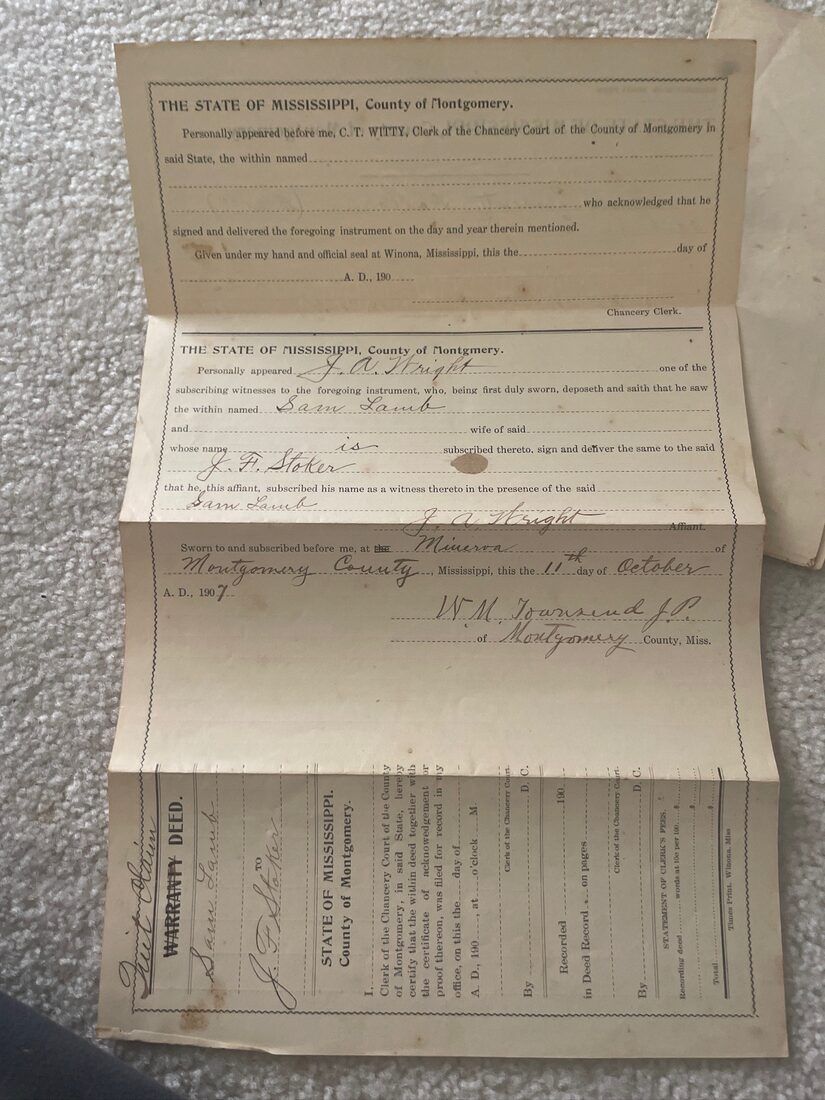 Quit Claim Deed · 1907
Sam Lamb to J.F. Stoker, on a printed warranty-deed form with “Warranty” struck through and “Quit Claim” written in. Witness J.A. Wright swore to it before a justice of the peace at Minerva, Montgomery County, on October 11, 1907.
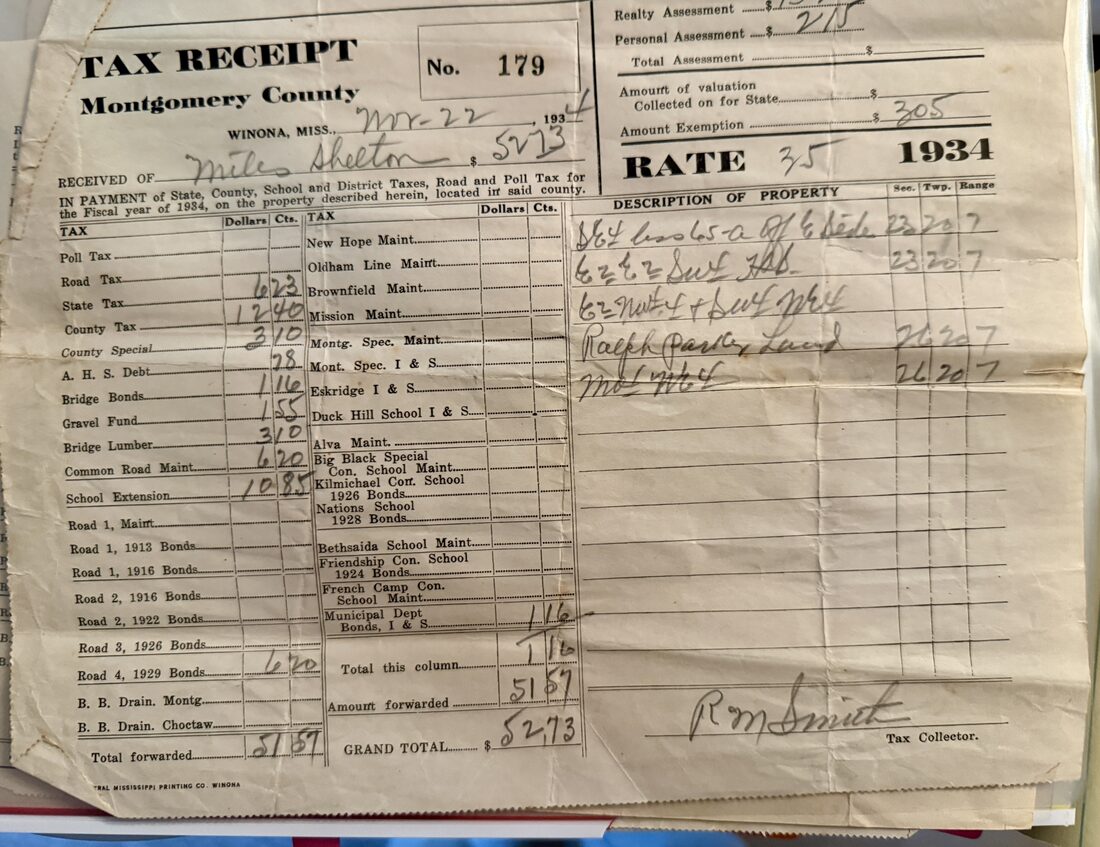 Tax Receipt · 1934
Montgomery County tax receipt for Miles Shelton, covering state, county, school, and road taxes on Spring Hill land for the 1934 fiscal year.
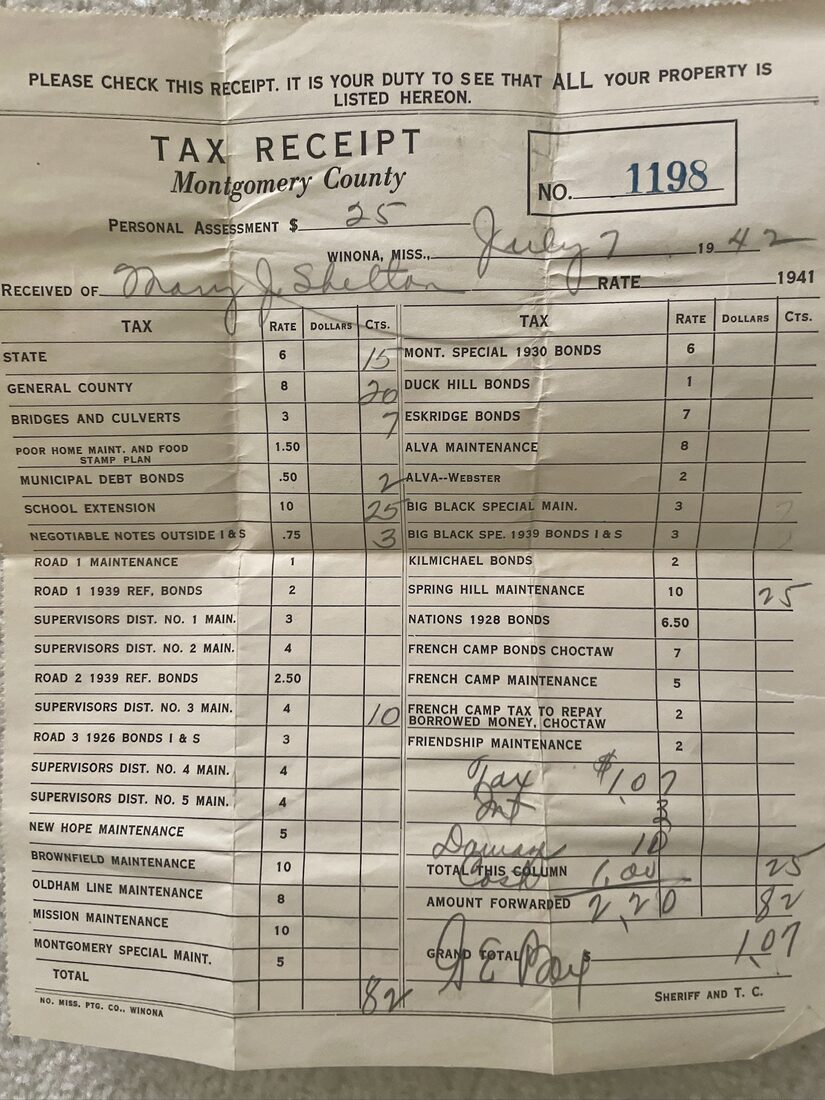 Tax Receipt · 1942
Montgomery County tax receipt for Mary J. Shelton, itemizing state, county, and Spring Hill Maintenance taxes paid on the family’s land.
More commerce documents continue to surface as families share their own archives — deeds, tax records, and receipts spanning generations.
Have a Deed, Receipt, or Ledger to Share?
Every document helps complete the record of a community that built and kept its own capital.